EASA recent experience: when can you (still) carry passengers?
The 90-day rule for carrying passengers: 3 take-offs, approaches and landings, the night case, and what really counts.
Cameron GERARD
Professional pilot and head of flight operations
Key takeaways
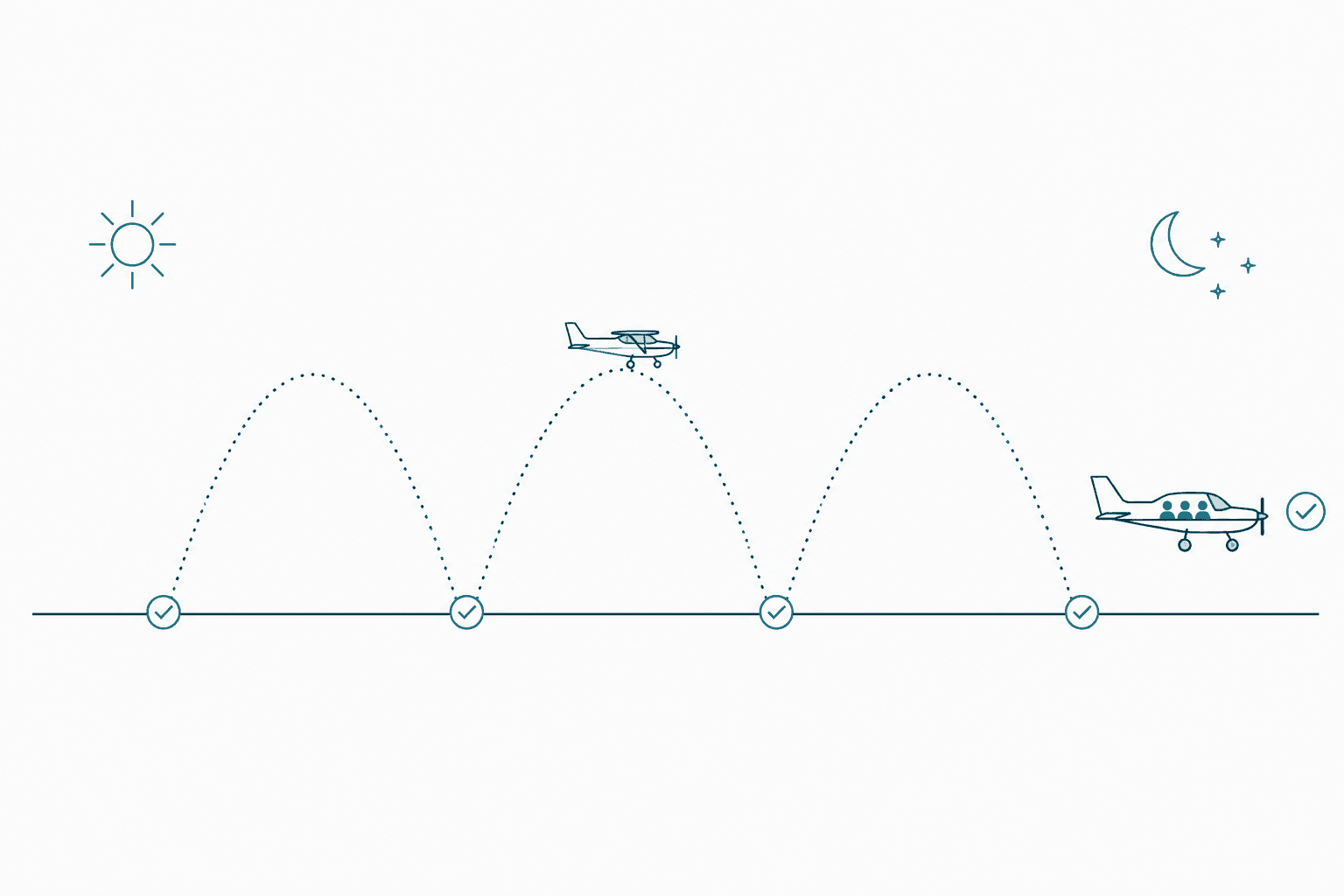
- To carry passengers, you must have carried out, in the preceding 90 days, at least 3 take-offs, approaches and landings as a pilot flying, in an aircraft of the same type or class.
- Without passengers, there is no requirement: you can fly alone, or with an instructor, to regain your recent experience.
- At night, as PIC with passengers: in addition, 1 take-off, approach and landing at night within the 90 days, unless you hold an IR.
- The experience must be gained in the same class or type as the flight with passengers: SEP currency does not count for a multi-engine flight.
"Can I take a friend up for a spin this weekend?" Behind that ordinary question lies a rule that many pilots know poorly, and that keeps coming up on the forums: recent experience. Carrying a passenger when you are not current, often without realising it, means flying outside the rules. Here, clearly, is what point FCL.060 requires, and how to know at a glance whether you are covered.
The 90-day rule
The principle is simple: you may only carry passengers, as PIC (or co-pilot), if you have carried out, in the preceding 90 days, at least 3 take-offs, approaches and landings as a pilot flying, in an aircraft of the same type or class (or a full flight simulator, an FFS, representing that type or class).
Note the word approaches: the rule does not speak only of landings, but of full take-offs, approaches and landings.
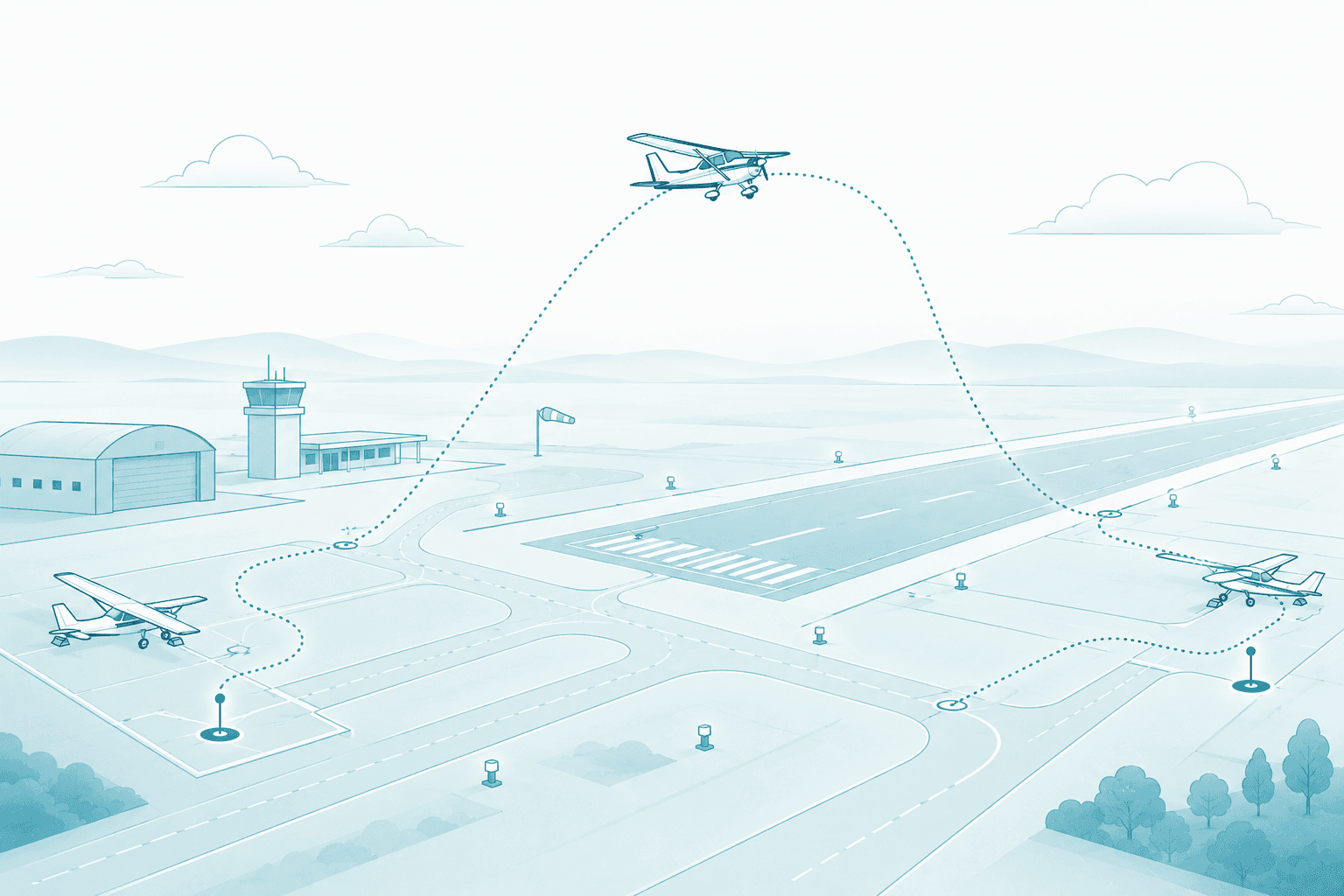
The key point, often misunderstood: without passengers, there is no requirement. You can always fly alone. So at any time, you can go and fly your 3 circuits solo to regain your recent experience, then take your passengers on board.
You can also fly them with an instructor or an examiner on board: the regulation makes clear that they are not then considered a passenger. However, no other passenger may be on board until you are current.
Flying at night: an additional requirement
To carry passengers at night, as PIC, a requirement is added to the 90-day rule: you must have carried out, in the preceding 90 days, at least 1 take-off, approach and landing at night as a pilot flying, in an aircraft of the same type or class (or an FFS representing it).
Only one exemption: if you hold an IR (instrument rating), this night requirement does not apply.
What counts: same class or type, simulator
Recent experience is not transferable from one aircraft to another: the 3 take-offs, approaches and landings must have been carried out in the same class or type as the intended flight with passengers.
In practice, being current on single-engine piston (SEP) does not make you current for a multi-engine flight: those are different classes. An FFS representing the type or class is, however, accepted, and the experience counts in single-pilot or multi-pilot operations depending on the privileges you hold.
For helicopters, it is the type that counts. The regulation does provide one accommodation: if you are rated on several types of non-complex helicopter with similar handling and operating characteristics (grouped by EASA), your 3 take-offs, approaches and landings may be carried out on just one of those types, provided you have flown at least 2 hours on each of those types in the preceding 6 months.
Which aircraft are covered?
The FCL.060 rule we have just seen applies to aeroplanes as well as helicopters (and to powered-lift aircraft, airships, VCA and gyroplanes). The TMG, being an aeroplane, is covered too.
Sailplanes and balloons, on the other hand, are no longer covered by Part-FCL: they have their own regulations, respectively Part-SFCL (sailplanes) and Part-BFCL (balloons), with distinct recent-experience conditions. If you fly in those categories, refer to their own rules.
Staying current without thinking about it
The real trap is not the rule itself: it is losing track. A pilot who has not flown for three months, or whose last circuits were on a different aircraft, can end up not current without realising it, and take a passenger on board in good faith but outside the rules.
The reflex: keep a running track of your recent take-offs and landings, by type and by class, and your 90-day deadlines, by day and by night.
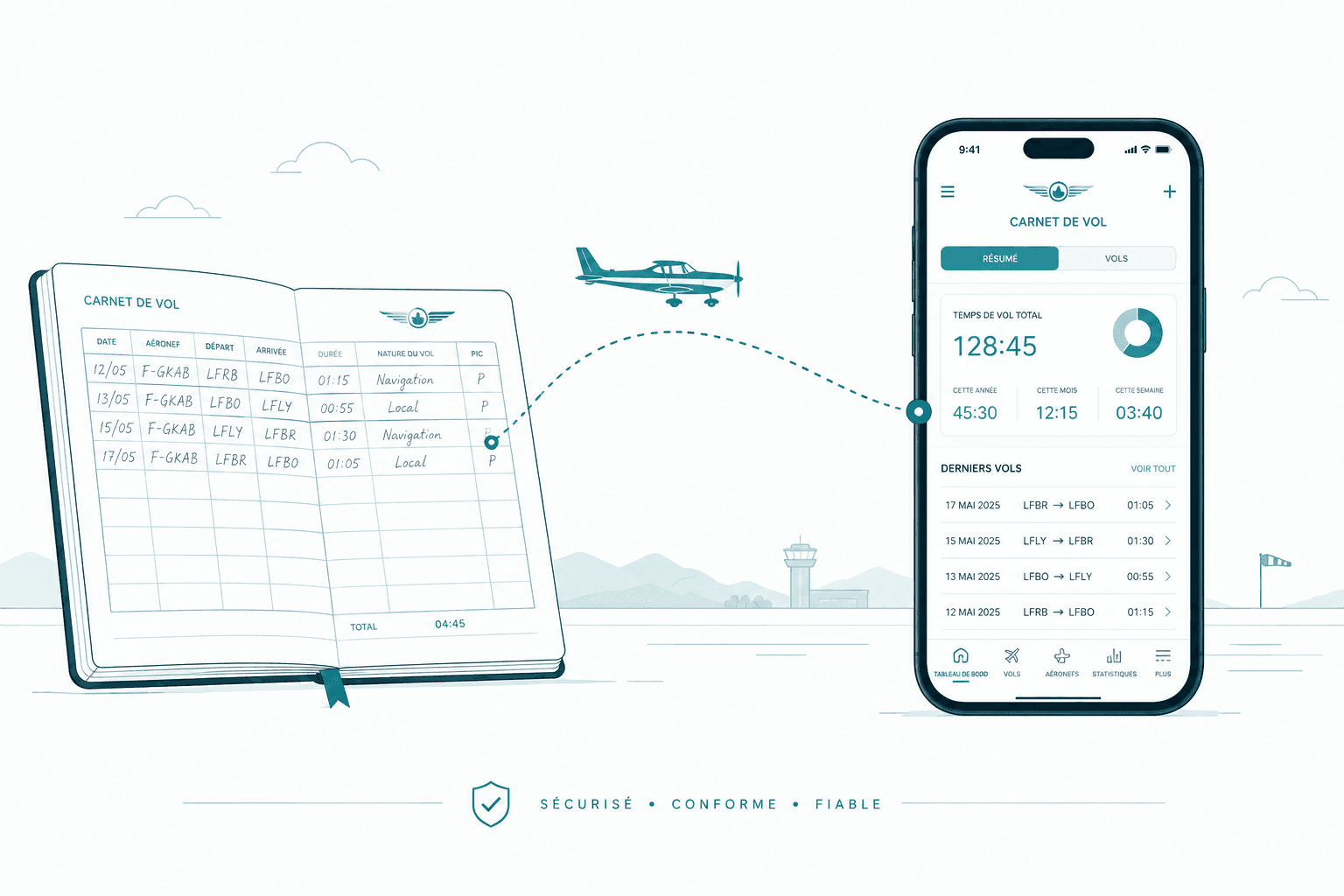
AerisLog computes your recent experience from your logbook and tells you, at a glance, whether you can carry passengers, by day and by night. See how.
In short
Carrying passengers comes down to one thing that is easy to remember: 3 take-offs, approaches and landings within 90 days, on the same class or type, plus 1 more at night if you fly at night without an IR. Without passengers, no constraint: you can always fly to get current again. Everything else is just a matter of tracking.
Frequently asked questions
How long does recent experience for carrying passengers last? 90 days. Beyond 90 days without the required 3 take-offs, approaches and landings on the relevant class or type, you may no longer carry passengers until you have done them again.
Can I fly if I am no longer current? Yes, but without passengers. You can fly alone, or with an instructor or an examiner (who is not considered a passenger), to carry out your 3 take-offs, approaches and landings and regain your recent experience.
What more is needed to carry passengers at night? In addition to the 90-day rule, one take-off, approach and landing at night within the 90 days, as a pilot flying, on the same class or type. Unless you hold an IR.
Does my single-engine experience count for a multi-engine flight? No. Recent experience must be gained in the same class or type as the flight with passengers. Single-engine piston and multi-engine are separate classes.
Regulatory source: point FCL.060, Part-FCL, Regulation (EU) No 1178/2011 (EASA Aircrew Regulation).
Ready to retire the paper logbook?
AerisLog logs your flights in 10 seconds, adds up your totals and keeps an eye on your deadlines. Free, on iOS and Android.