PIC, dual, PICUS: which function should you log in your logbook?
PIC, dual, PICUS, SPIC: how to count your hours by function on board, and why flight time is counted block to block.
Cameron GERARD
Professional pilot and head of flight operations
Key takeaways
- You log your hours by your function on board: PIC (pilot-in-command), dual (instruction received), PICUS or SPIC (PIC duties performed under supervision).
- SPIC and PICUS hours are logged as PIC, but must be countersigned by the pilot-in-command or the instructor in the Remarks column.
- For an aeroplane, the flight time you log is counted block to block: from the aircraft's first movement to its final rest, taxi included. It is not the airborne time.
- For a helicopter, time is counted from the moment the rotor starts turning until it stops.
PIC, dual, PICUS, SPIC: which line do you enter the hours of your last flight on? The question comes up again and again, for students and experienced pilots alike, and a mistake can throw off totals that are, themselves, regulatory. Add another persistent confusion, that of "flight time", and every entry can leave you hesitating. Here, clearly, is what the Part-FCL definitions say.
Functions on board: PIC, dual, PICUS, SPIC
Every flight hour attaches to a function. The official definitions (point FCL.010) are precise:
- PIC (pilot-in-command): the pilot designated as being in command and charged with the safe conduct of the flight.
- Dual instruction time: the time during which you are receiving flight instruction from a properly authorised instructor.
- SPIC (student pilot-in-command): a student pilot acting as pilot-in-command on a flight where the instructor only observes and does not influence or control the flight.
- PICUS (pilot-in-command under supervision): a co-pilot performing the duties and functions of a pilot-in-command under the supervision of the PIC, on a multi-pilot aircraft.
Note the logic: dual is the instruction you receive; SPIC and PICUS are you performing the PIC duties, but supervised.
How to count them in the logbook
Once the function is identified, the counting follows clear rules (AMC1 FCL.050):
- PIC: you log as PIC all the time you are in command. You may also log as PIC your solo flight time, your SPIC time, your time under supervision, and successfully completed tests and checks, provided that these are countersigned by the instructor or examiner.
- Dual: you log it as such; it may be recorded if it is certified by the instructor from whom it was received.
- SPIC and PICUS: they are logged as PIC, but each entry must be certified by the PIC or the instructor in the "Remarks" column.
A point of common sense that follows from the definitions: the same hour is not logged as both PIC and dual. In dual, you are receiving instruction and the instructor is the pilot-in-command; in PIC, SPIC or PICUS, you are performing the duties of pilot-in-command. You are in one situation or the other, not both.
Flight time or block time: which do you log?
Here is the most stubborn confusion, and its answer is clear-cut. For an aeroplane, flight time is defined (point FCL.010) as the total time from the moment the aircraft first moves for the purpose of taking off until the moment it finally comes to rest at the end of the flight.
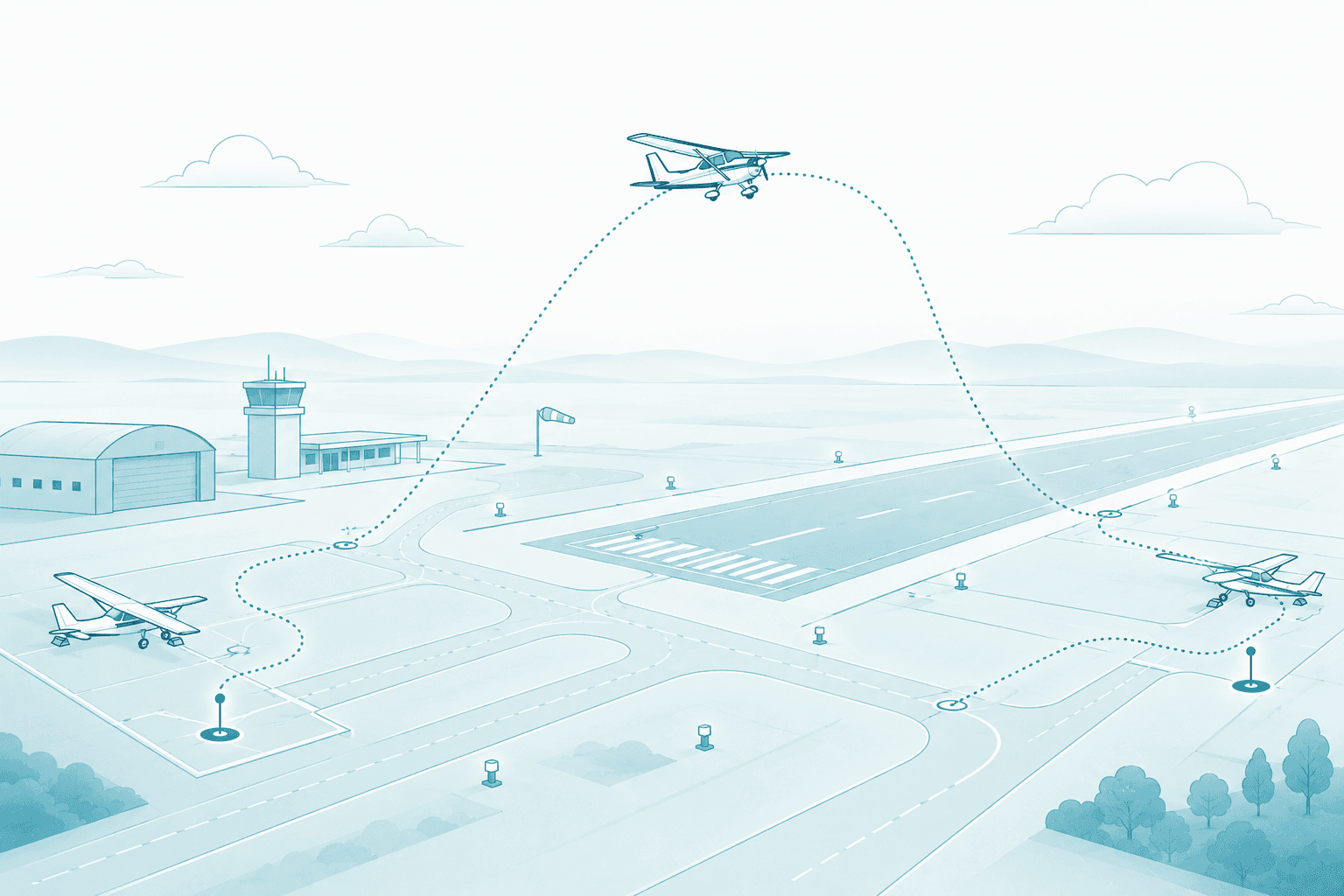
In other words, the flight time you log is counted block to block: it starts the moment the aeroplane moves (start of taxi) and stops at the final rest. Taxi is included. What is commonly called "block time" is flight time in the EASA sense. The airborne time, wheels off the ground, is therefore not what you enter.
An example: 10 minutes taxiing out, 50 minutes airborne, 5 minutes taxiing back. Your flight time is not 50 minutes, but 1 h 05, from first to last movement.
For a helicopter, the definition differs: time is counted from the moment the rotor blades start turning until they finally stop at the end of the flight.
Counting without error
Function on board, countersignature, block time: that is a lot of rules for a single logbook line, and just as many chances to get wrong on totals that are regulatory.
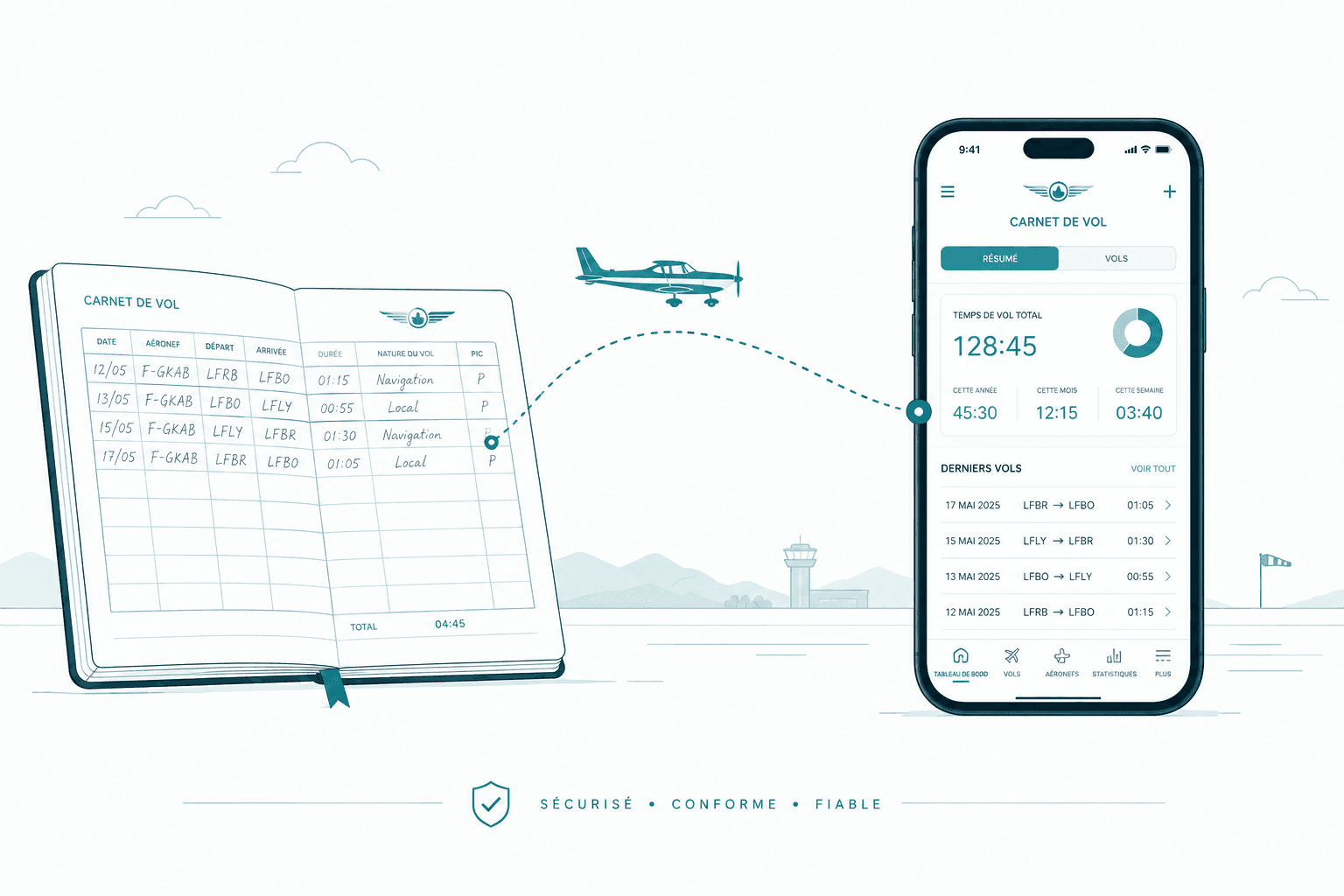
AerisLog lets you choose your pilot function in one tap, computes your times in the correct FCL.050 format, and keeps your totals up to date automatically. See how.
In short
It all comes down to the function you held: PIC when you are in command, dual when you are receiving instruction, SPIC or PICUS when you perform PIC duties under supervision (logged as PIC, certified in Remarks). And for the duration, remember one thing: an aeroplane's flight time is counted block to block, taxi included, not as airborne time.
Frequently asked questions
What is the difference between SPIC and PICUS? SPIC is a student pilot acting as pilot-in-command while the instructor merely observes. PICUS is a co-pilot performing the duties of pilot-in-command under the supervision of the PIC, on a multi-pilot aircraft. Both are logged as PIC, with certification in the Remarks column.
Can I log PIC and dual for the same flight time? No. In dual, you are receiving instruction and the instructor is the pilot-in-command; in PIC (or SPIC/PICUS), you are performing the duties of pilot-in-command. A given hour falls under one or the other.
Is flight time the airborne time or is taxi included? Taxi included. For an aeroplane, flight time is counted from the first movement for the purpose of taking off until the final rest: it is block time, not airborne time.
How is a helicopter's flight time counted? From the moment the rotor blades start turning until they finally stop at the end of the flight.
Regulatory sources: definitions (PIC, PICUS, SPIC, dual instruction time, flight time), point FCL.010; counting rules, AMC1 FCL.050; Part-FCL, Regulation (EU) No 1178/2011.
Ready to retire the paper logbook?
AerisLog logs your flights in 10 seconds, adds up your totals and keeps an eye on your deadlines. Free, on iOS and Android.